Table of Contents
Marana Airport Original A-4 Sim Photo Shoot
I visited the storage site for the A-4 Simulator 4/30/2019 at Marana Airport.
Overall View

Note some cracking in the windshield. There is currently white plastic in both the main canopy, and the forwarded three panels, which would need to be replaced with clear plastic with the scenery projected with the modern implementation.
The circuit boards shown here could be removed and replaced with modern components and connections.
When completed, the portion of the A-4 simulator visible here would likely only need a single main power supply connection, as wireless communications would be built in.
Vintage Controls
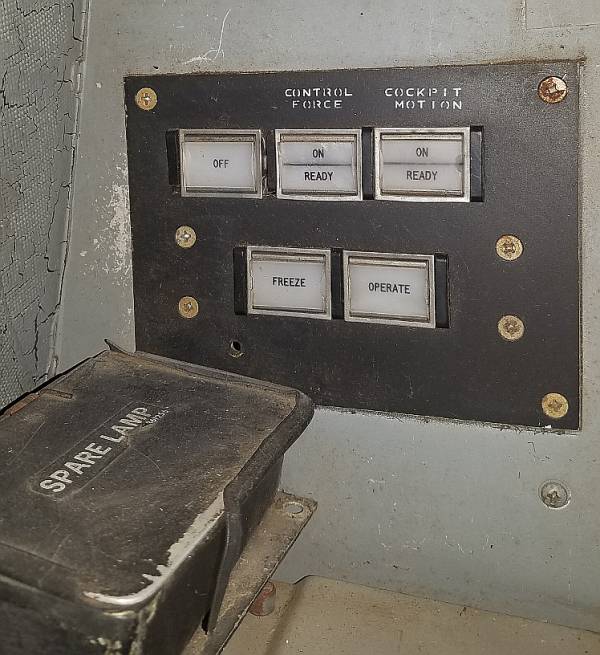
The original A-4 Simulator controls shows general On/Off, and indicator for Control Force, and full motion On/Ready. This is located in cockpit on right, full back.
Cockpit And Gauges

Most cockpit gauges are present, but are not connected.

Good shot of cockpit gauges with miniature checklists.
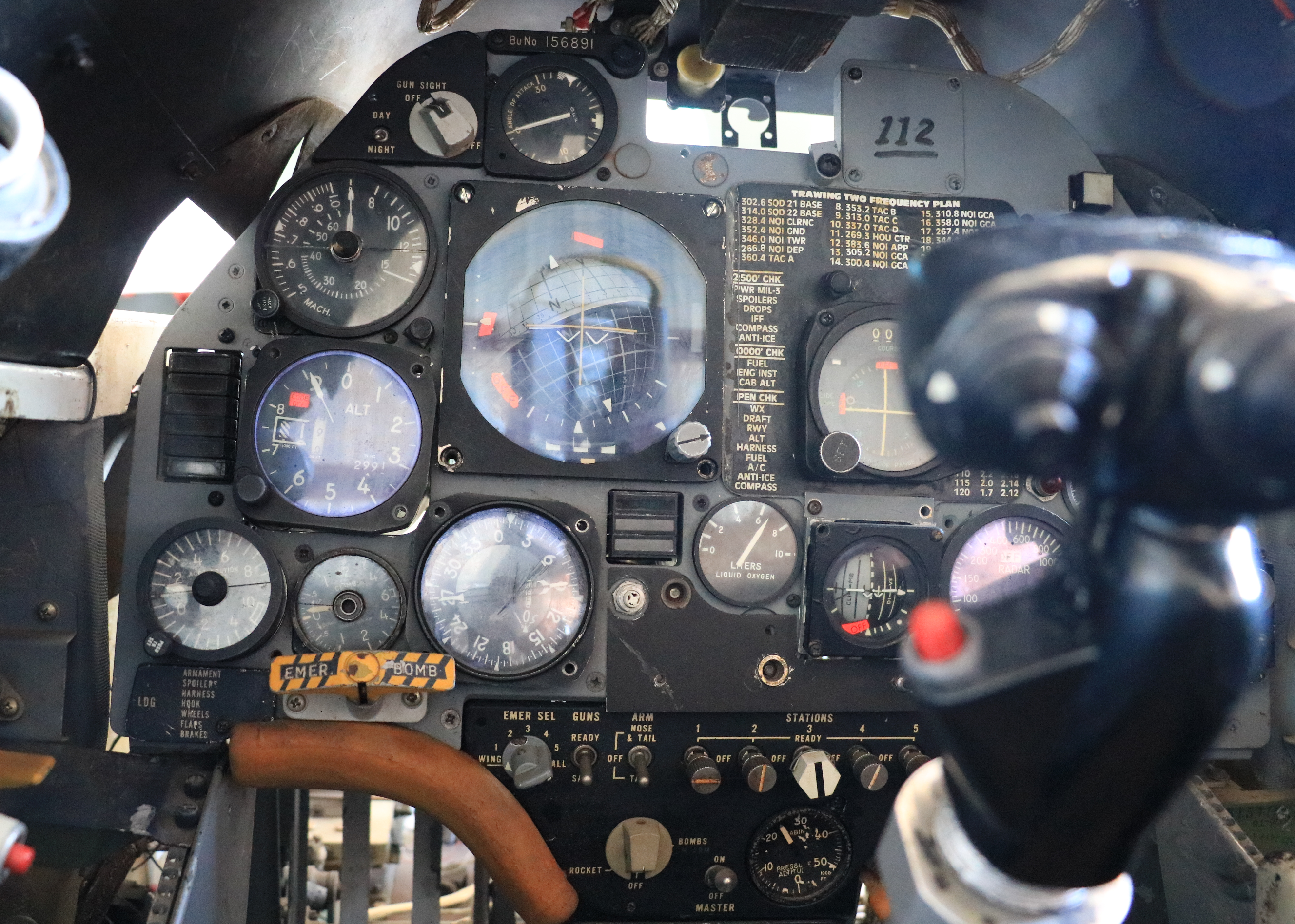 (Click to enlarge)
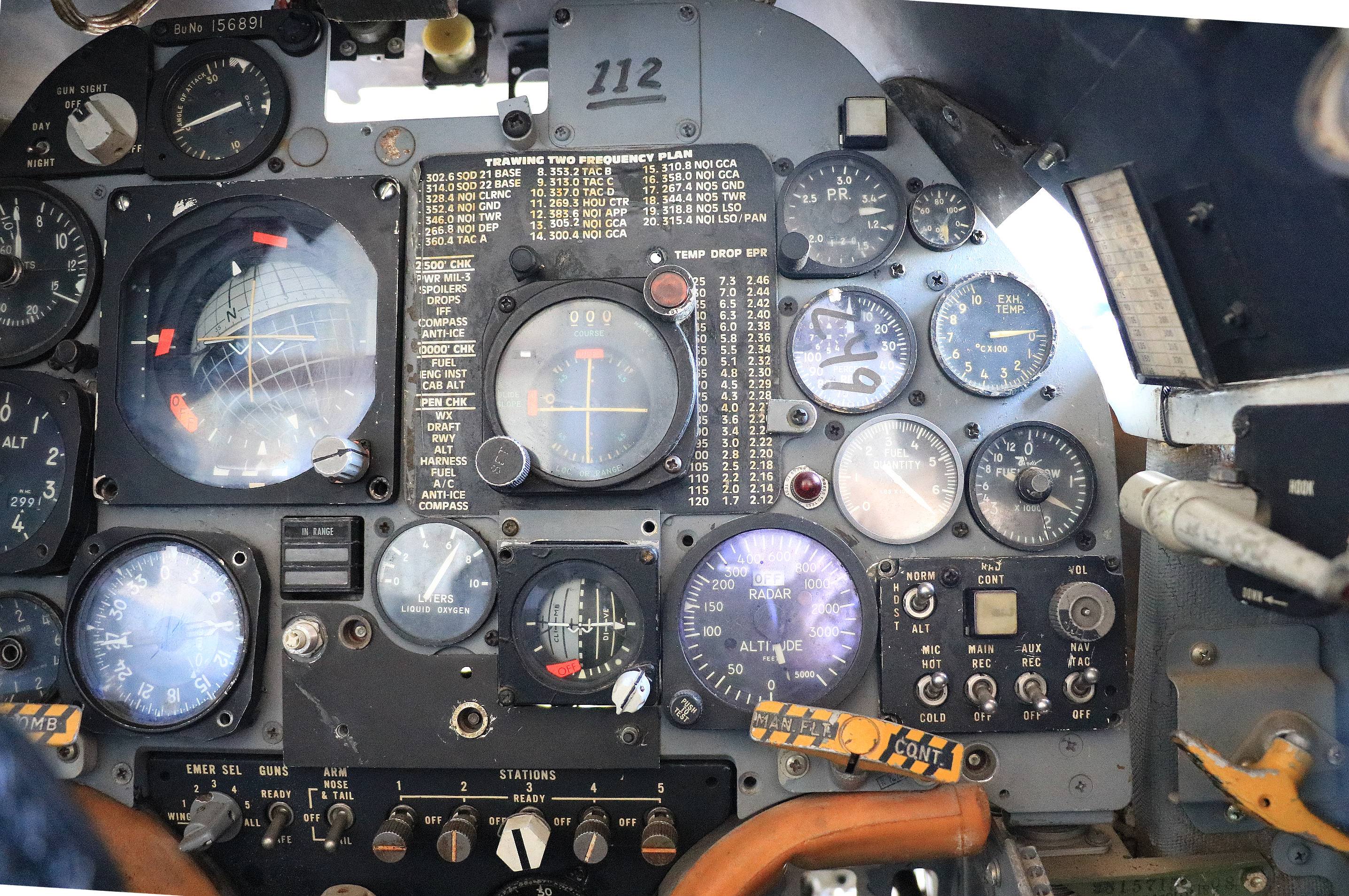 (Click to enlarge)
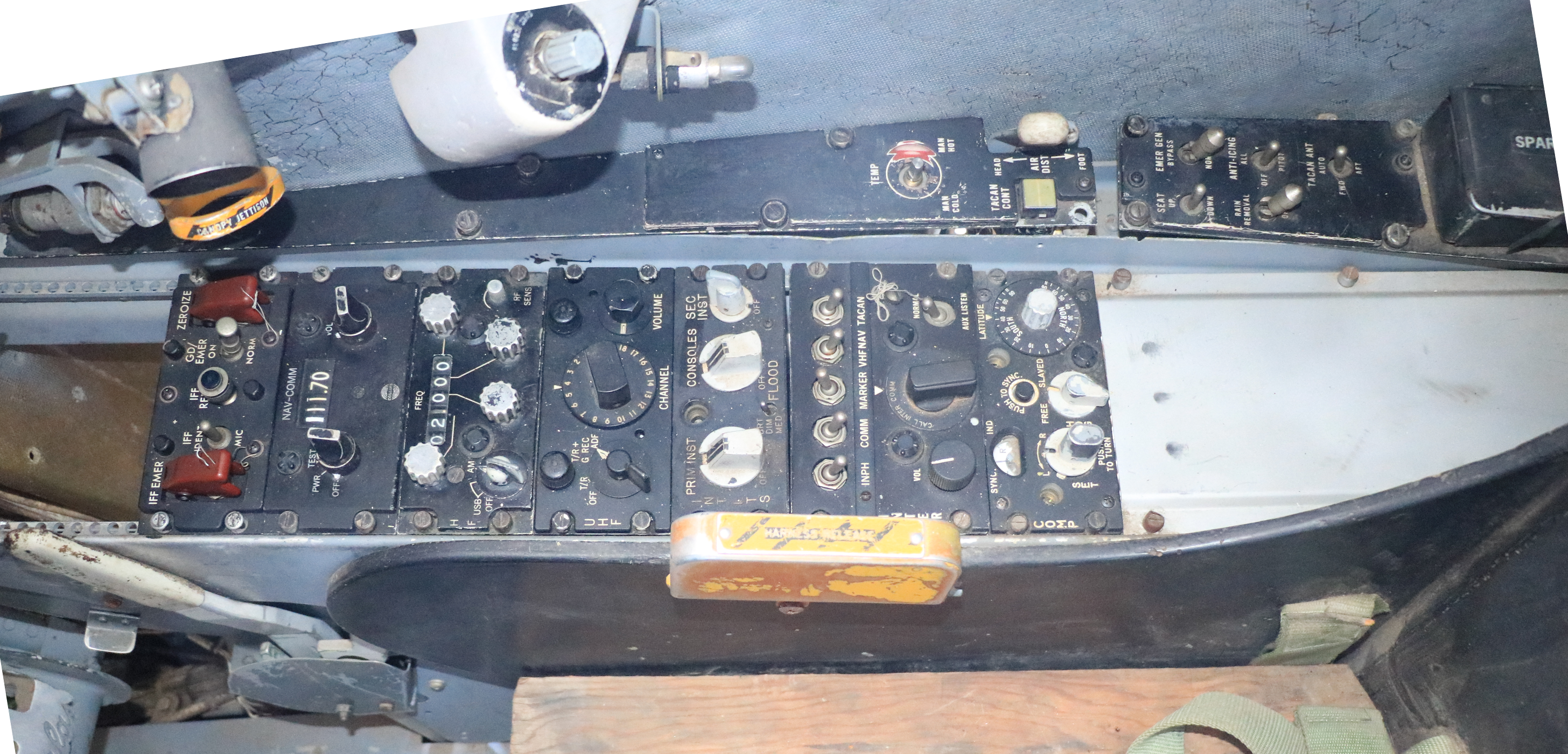 (Click to enlarge, most gauges not connected)
Unneeded Circuitry

These relays and complex connections will (sadly) no longer be needed.

These components, which are on the left, and would be rearward of the throttle/flap controls, are not likely to be needed. Perhaps we can put a cup-holder there!
Throttle Assembly
Although not connected to anything, happily the throttle assembly is intact and apparently in good working order. Some changes may need to be made to accurate numeric values.
View showing Rudder Trim control, Elevator Trim control, and throttle potentiometer

Throttle Gearing - Some is to report positioning, some is to provide friction.

Some details of the flap, throttle, trims, and other controls

Brake Pedals
Pressing the top of the right pedel actuates the piston. (This view is from the nose toward the back.) It wasn't connected to anything so it had only light resistance and a gurgling sound. Mage said he might want that for the pile. Apparently it didn't have an effect in this original simulator.
Right Pedal, with hydraulic actuator

Left Pedal, with simulator type brake gauge

Three Servos, And Unknown part (with Red Arrow)
There are three assemblies like this, located in the “nose,” that are nearly identical, left to right (rudder, elevator, aileron). When the control stick (or rudder pedal) is moved, the rod slides forward and backward via bell cranks. The assembly has a long potentiometer to indicate position, and unknown hydraulic, perhaps for feel.
All of the hydraulic lines are Tee'd together, and two pipes go toward the ground (not visible) and go toward the rear of the simulator.
According to a similar part number, this is a MOOG 76-559 Hydraulic Servo Valve
There are three servos (Model 76-101H), nearly identical (middle one has additional wiring connector). There is an unknown part in the connecting linkage, which could be strain gauges, or something which indicates pressure on the corresponding controller.


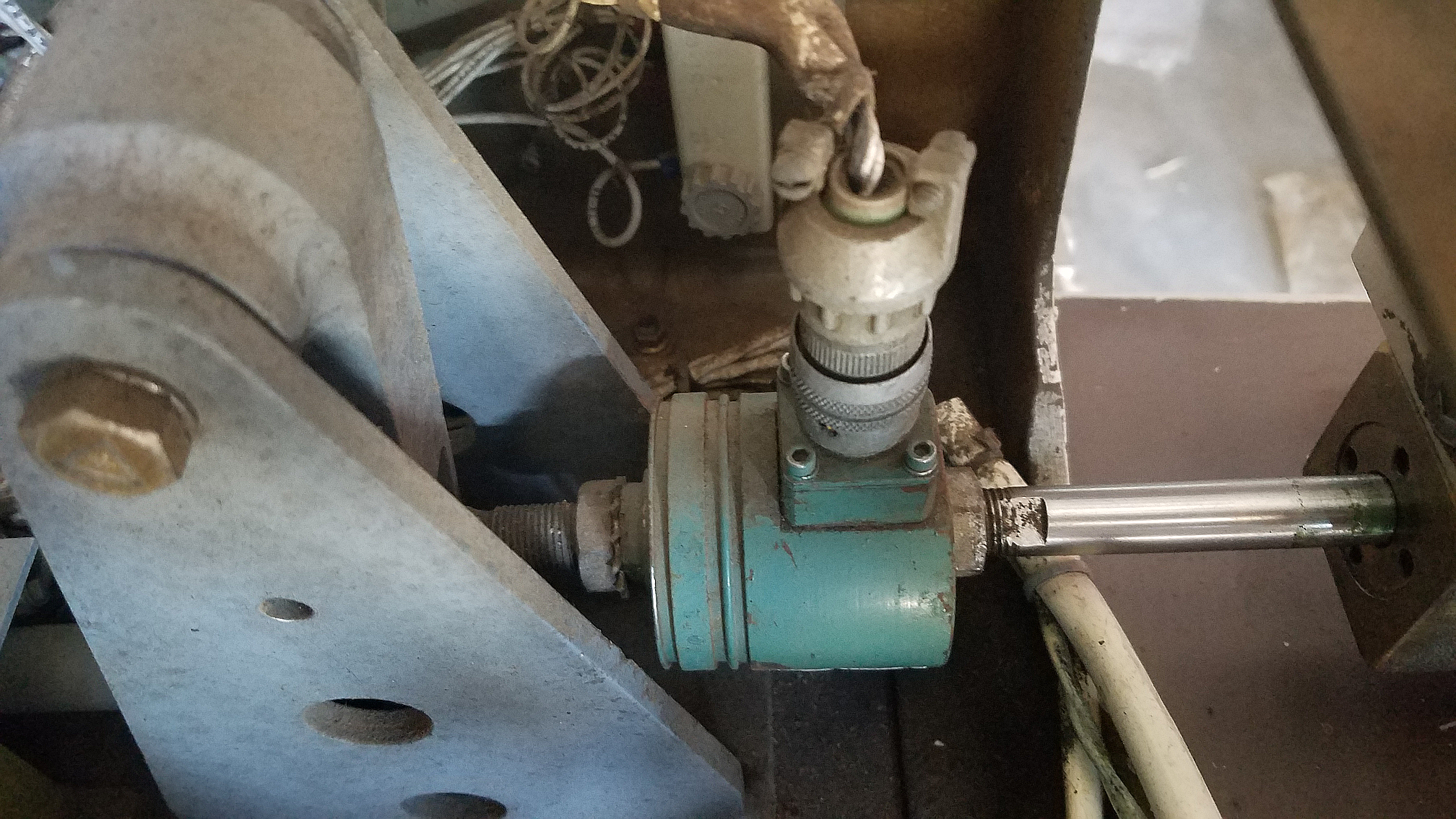
Unknown Sensor
There is a sensor like this between the bellcrank and the assembly which measures control position. Assuming it is some kind of pressure gauge. Doesn't turn, and the force goes directly through it.
 (Click to enlarge)